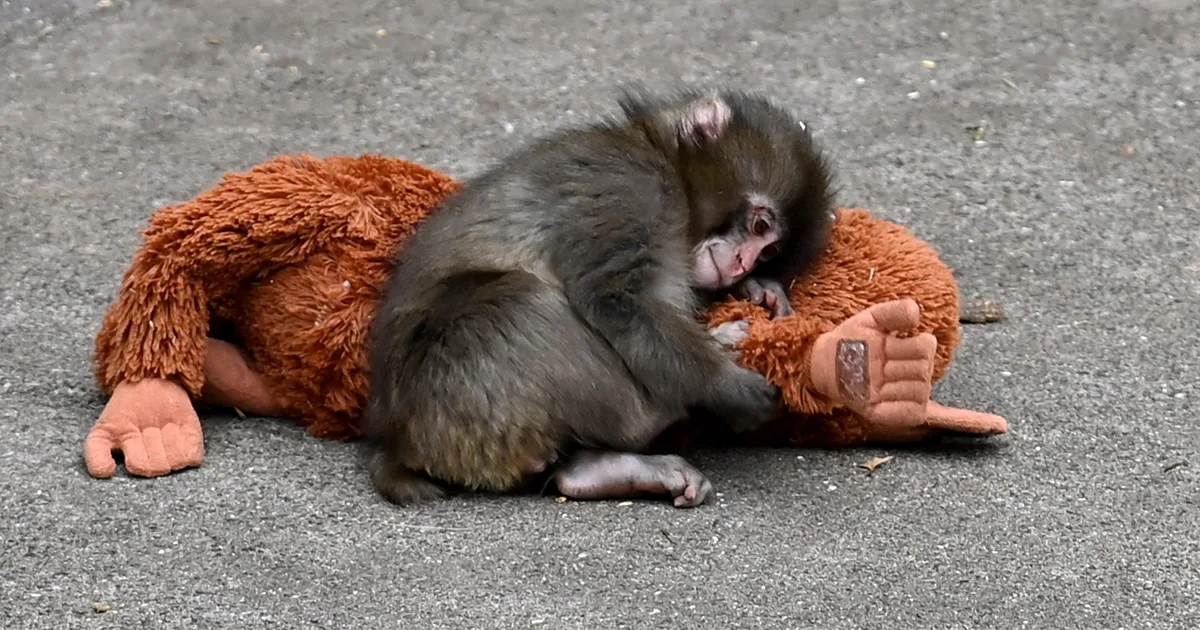
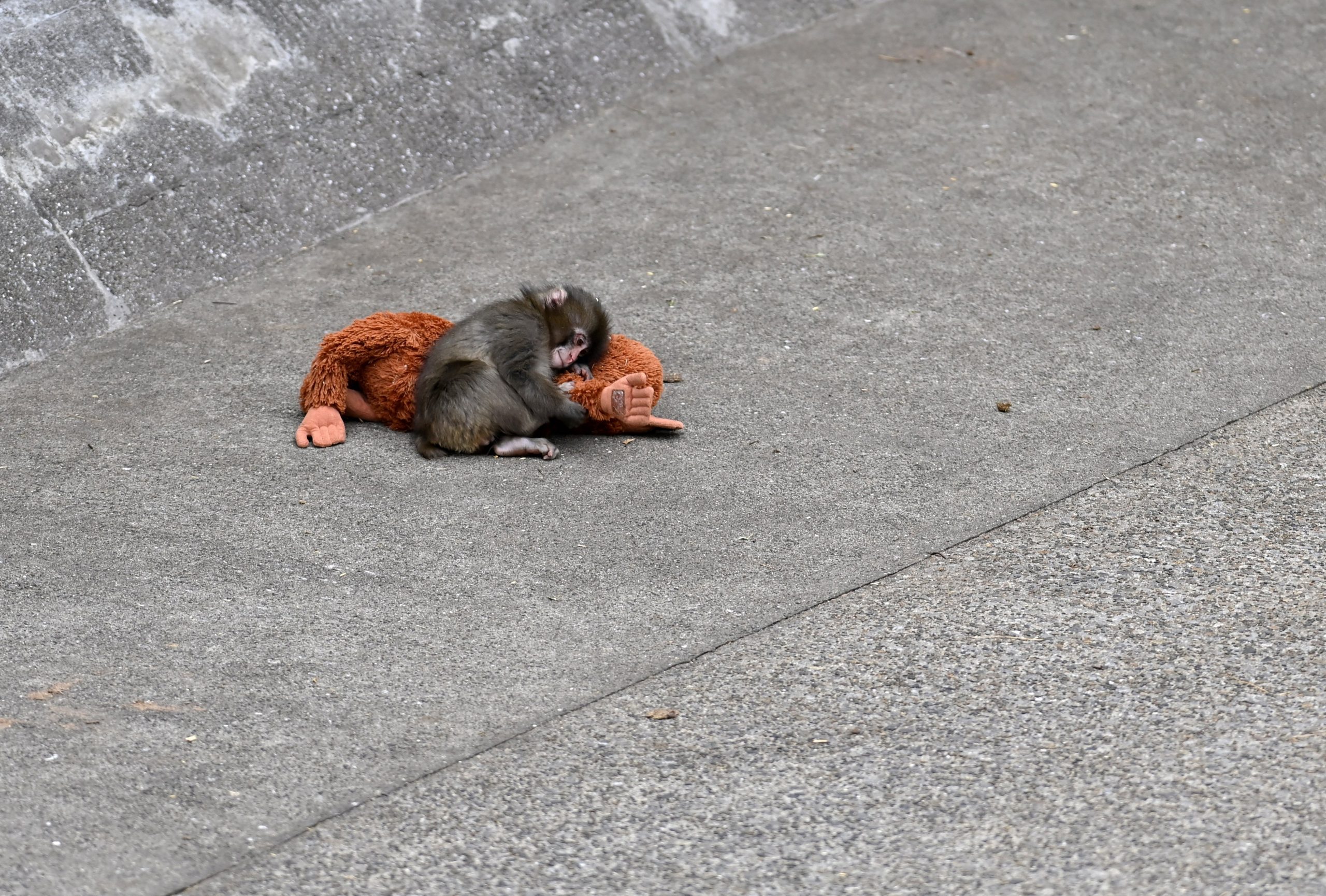
Punch the monkey, a resident of Ichikawa City Zoo, has become a sympathetic figure to millions around the globe. He’s a monkey outcast who has embraced a stuffed animal for solace, its only friend in a world that seems to disregard him. Scientists have now stepped forth to lay out the potential tragic consequences Punch could face due to his social rejection.
Punch the monkey – a baby macaque – has tugged at heartstrings globally through tear-jerking videos of his rejection by his community and the comforting presence of a plush orangutan at the Ichikawa City Zoo, Japan.
Video footage capturing Punch being shunned by his mother and ostracised, or rather ‘bullied’, by his siblings has made it a difficult watch. Zoo staff assure that this development is routine, a part of their growth. Nevertheless, it’s a struggle not to empathize with the little creature.
There seems to be a modicum of light at the end of the tunnel as Punch appears to be raising his social standing. He was seen getting comforted and groomed by another macaque. However, the happiness was ephemeral.
What destiny awaits Punch if he continues to be ostracised by his mother and assailed by his brethren? Dr. Emily Bethell, an associate professor specializing in Primate Cognition and Welfare at Liverpool John Moores University, explained Punch’s potential takeaway to The Daily Mail.
A Close Watch on Punch
Bethell explained that the zookeepers are likely watching Punch’s predicament keenly, deciding how to handle it.
“Punch, I presume, is under scrupulous observance by the keepers, who are putting their heads together to figure out ways to keep him within the group. That’s the gold standard,” she told The Daily Mail. “If he is placed at risk of physical harm, removal from the group will be considered. But, as macaques are social and intelligent, such a measure would be a last resort, only if he is seen to be prone to physical harm.”
The gravest circumstances, according to the behavioral expert, might not involve violent assaults on Punch by his cohorts. Instead, the long-term effects of exclusion from the group, leading to potential developmental mishaps that would hinder his social behavior, could be more distressing.
“Punch has been abandoned by his mother and the social group as a whole at such a key developmental stage where he’s expected to pick up essential social conducts that would aid him navigating the hierarchical social scheme of macaques,” Bethell explained further.
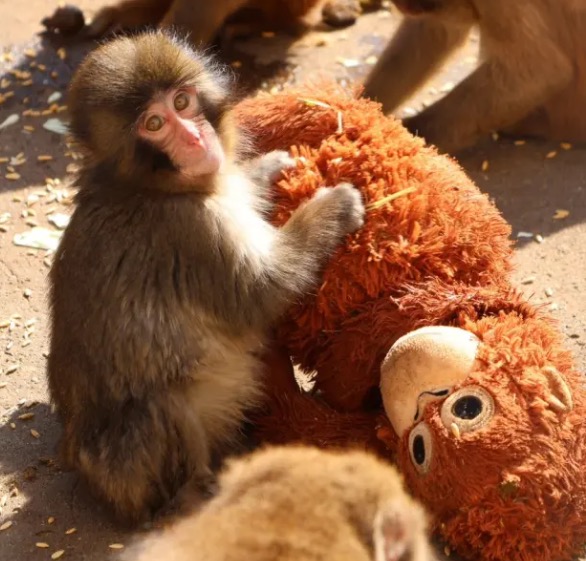
“As a 6-month-old, a wild macaque remains somewhat reliant on its mother for affection, food, and lessons on social conduct.”
Punch Might Forge Fresh Social Bonds
Even though the adorable youngling seems left to his own devices, there remains a silver lining. As Punch is male, he may get an opportunity to merge with a different group as he matures.
“Japanese macaques are a matriarchal species and males are typically seen migrating from the social group at the onset of sexual maturity,” Emily Bethell shared with the news portal.
She highlighted, “There’s evidence showing mothers investing more effort in raising daughters, as they remain in the birth group. Consequently, he might be moved to a novel social group when he grows, providing an opportunity to form new social ties.”
Let’s fervently hope that Punch finds solace, new mates, and a caring family soon. Share this article if you think Punch deserves a fighting chance too.