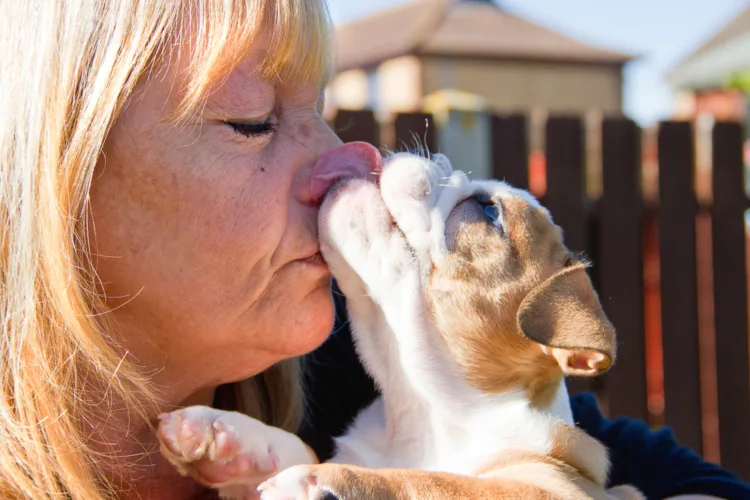
You’ve just settled in after a long day — feet up, warm drink in hand — when suddenly, your dog launches a full-on tongue attack straight at your face. Cute? Maybe. Annoying? Possibly. Dangerous? Can be.
But it also makes you wonder: why on earth do dogs do this?
You’re not alone. Face licking is one of the quirkiest, most intimate ways dogs show us they care — or at least that they’re interested. Let’s unpack why your furry friend treats your cheeks like a lollipop.
It all starts with instinct
From the moment puppies are born, they explore the world with their mouths. In the wild, they lick their mom’s face to get her to regurgitate food. Yep, it sounds gross —but it’s completely normal in doggy life.
That behavior sticks, even though your grown-up pooch isn’t expecting a half-digested sandwich in return. Licking your face taps into those early instincts—but it’s more than just leftover puppy habits.
Dogs have a social language
Licking is a social tool. It can be a peace offering, an appeasement gesture that basically says, “I come in peace.” It can also signal excitement, nervousness, or a desire to connect. Think of it like a gentle tap on the shoulder: “Hey, you okay?”
And yes, sometimes it’s affection, but not romance. Dogs don’t do romance. They do connection. A face lick is just one way your dog checks in on you emotionally.
That taste factor
Let’s be honest: faces taste interesting. Salt, leftover snacks, even sweat, all of it makes your skin irresistible. For dogs, taste and smell are deeply intertwined. So sometimes, licking is just pure curiosity.
”The Kiss-effect”
Science suggests that those slobbery dog kisses might actually be doing kids some good. The hygiene hypothesis proposes that early exposure to certain microbes helps “train” the immune system, reducing the risk of allergies and asthma later on. Kids who grow up with pets, or around farm animals, tend to develop stronger, more balanced immune responses.
Even prenatal and early-life exposure to dogs appears to have a protective effect, shaping immune development in ways that make children less likely to suffer from allergies or asthma.
Those affectionate licks aren’t just cute, they can transfer beneficial microbes that influence a baby’s gut microbiome during critical stages of growth. In other words, a little puppy love might actually help build a healthier immune system.
The dark side
But let’s also face this: a dog’s mouth isn’t exactly sparkling clean. In fact, of all the microbes humans share with dogs, only about 16% have been identified—meaning every enthusiastic lick brings a host of unknown bacteria straight to your face.
While some of these bacteria can actually benefit our health, others carry real risks. Take Capnocytophaga, for example — a bacteria found in dogs’ mouths that’s rare but can cause serious, even deadly, infections in humans.
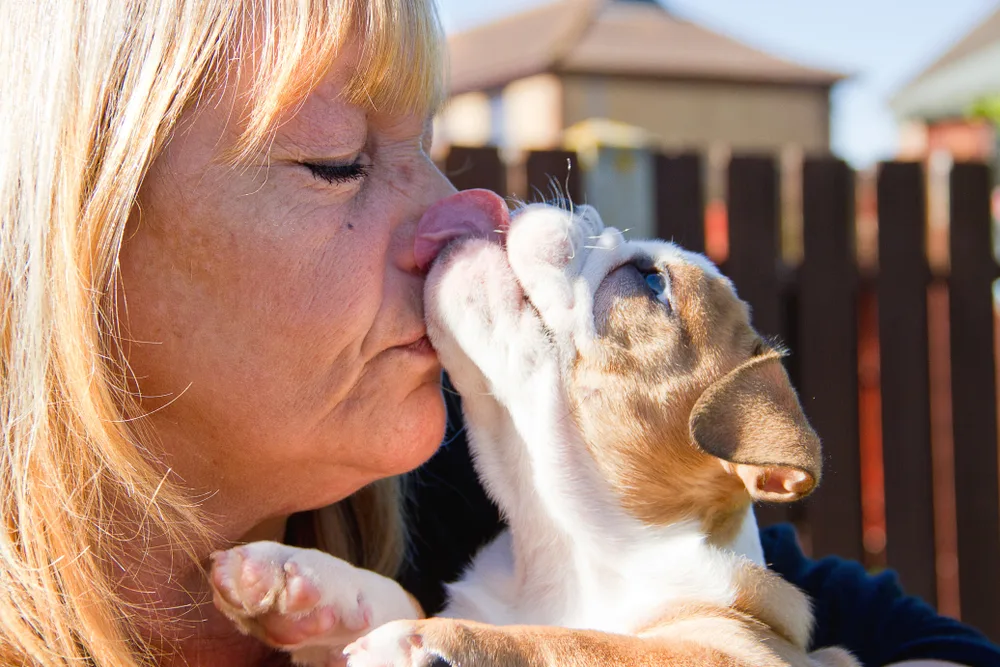
Then there’s Pasteurella, another bacteria that can lead to infections, especially in people with weakened immune systems, young children, or anyone who isn’t too keen on germs. Bottom line: it’s all part of the package when living with a dog, but it’s okay to set boundaries if face-licking isn’t your thing.
Teaching alternatives
If face licking isn’t your thing, gentle redirection works wonders. Turn away, walk off, or teach a simple “off” cue. Reward calm behavior. Over time, your dog learns that licking your face doesn’t get the reaction they want—but good behavior does.
Most ‘licky breeds’
According to John Burns, MBE, a leading veterinarian and founder of Burns Pet Nutrition, some dog breeds are especially prone to giving out slobbery kisses.
If you’re thinking about adding a new four-legged family member, here are his seven most “licky” breeds:
Labrador Retriever
Poodle
Golden Retriever
Dachshund
German Shepherd
Beagle
Corgi
A little perspective
Dogs don’t lick for power or mischief. They’re just being dogs. Each lick is layered: a bit of instinct, curiosity, connection, and maybe even love.
Next time your dog goes in for a face-full of kisses, pause for a second. You might just be witnessing one of the many odd, sweet, and utterly dog-like ways they interact with the world—and with you.
Bottom line: occasional face-licks are mostly harmless if your dog is healthy. Keep them up to date on vet visits, enjoy the attention if you can, and redirect when needed. After all, a dog’s love—and their tongue—is never completely predictable.
READ MORE